When a company invests in a major technology transformation, buys the new system, and spends the money, but nothing actually changes, the problem may never have been the software at all. More often than not, the real issue is people or process, and you could end up changing the wrong thing.
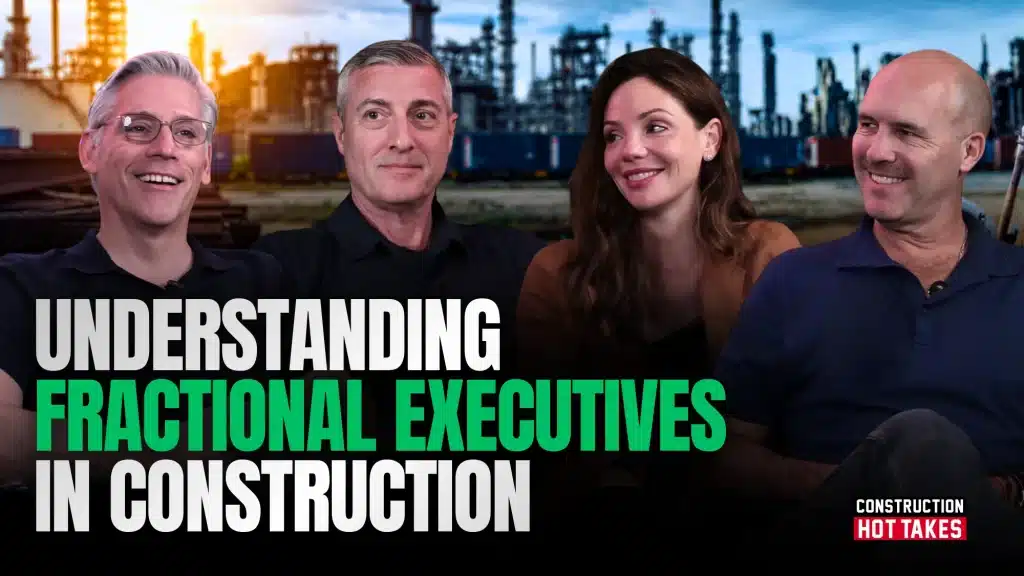
In this episode, Adam Cooper, Greg Gorman, and Jeff Robertson react to Greg’s LinkedIn post on what it really takes to transform a business, and to the comments it sparked. They also break down the three camps in every company (early adopters, fence sitters, and resistors) and why picking the right champions can make or break a change. Plus a listener’s challenge to start with what the organization is trying to achieve, and how workarounds quietly become the real process.
Your system works exactly the way it was designed, whether you meant it to or not. Turn the light on before you start moving the furniture.
What’s in this episode
- Why one change ripples through the whole organization
- Why transformation never really ends
- What Kodak and Nokia show about companies that stop evolving
- Why so many software rollouts fail even when the implementation goes fine
Timestamps
00:00 Cold Open: “What If the Problem Was People?”
00:30 Greg’s LinkedIn Post on Transformation
01:16 It’s Never Just One Thing
01:38 The Three-Legged Stool: People, Process, Technology
02:28 When the New ERP Feels Like a Threat
03:49 Transformation Never Really Ends
05:00 “The Only Constant Is Change”
05:34 Kodak, Nokia & Companies That Didn’t Evolve
06:44 The Mountain Without a Top
07:17 Your Comments: Misalignment Doesn’t Happen Overnight
08:11 What If You Changed the Wrong Thing?
09:13 Why Rollouts Fail
10:03 Finding People Hungry for Change
10:40 Early Adopters, Fence Sitters & Resistors
13:01 Planning Who Will Champion It (and Who Will Resist)
13:45 Picking the Right Champions
15:34 A Challenge: Start With What You’re Trying to Achieve
17:16 Symptoms vs. Root Causes
18:53 When Workarounds Become the Process
19:18 “The System Works Exactly as Designed”
19:53 Homegrown Tools & the Secret Spreadsheet
20:43 Turn the Light On Before Moving the Furniture
20:55 Wrap-Up
How Successful Was Your Last Software Rollout?
If your team bought the new system but still runs your jobs through workarounds, Ascent Consulting looks at the people, process, and technology together and helps you change what actually needs to change.
Transcript
[00:05] Greg Gorman: So they made a great transformation in their technology. They got a new system. They spent all the money. What if their problem was people? What if their problem was process? They’ve made one transformation in one area and they didn’t see any change because they changed the wrong thing.
[00:19] Adam Cooper: I had somebody tell me one time, the system works exactly the way it’s designed, whether you did it intentionally or unintentionally.
[00:25] Jeff Robertson: Somebody says, “We do it this way and it sucks.” Well, it’s working exactly as you designed it.
[00:31] Adam Cooper: All right, welcome to Construction Hot Takes. Today we’re going to talk about your post about transformation. So, why don’t you get us started by reading the quote or the post that you put up on LinkedIn?
[00:43] Greg Gorman: Yeah. So, I put a LinkedIn post up about what it takes to transform a business. So, this is what it says: “I’ve been spending a lot of time reflecting on what it really takes to transform a business. Not just on paper, but in the day-to-day operations where change actually happens. Having worked with companies at every stage of the journey, one thing has become clear. Transformation is rarely just about one thing. It is an untangling of people and processes that are combined with technology issues that have become misaligned over time.” So the point is that when you try to change an organization, it’s not ever really only about one thing. You can’t really identify one thing. You sort of identify maybe lots of things, and you should be looking at more than one thing. That’s kind of the, I guess, the hypothesis of what it takes to transform a business.
[01:37] Adam Cooper: Yeah, it’s a more holistic approach.
[01:39] Adam Cooper: You can’t change a technology without impacting people and process. And
[01:44] Adam Cooper: It’s like the three-legged stool, right? Any one change ripples through the rest.
[01:49] Jeff Robertson: There’s kind of an unraveling sweater sort of analogy here, where if you pull on something, you’re going to do something else that you may or may not have intended to do.
[01:58] Adam Cooper: It’s connected. Everything’s connected. I always think of construction companies like gears in a watch. There’s all these different gears, or the different departments, and when they’re all working together, the watch tells time, and when things are out of whack, it’s off. And you’re trying to fine-tune the watch.
[02:12] Jeff Robertson: Well, the thing that occurs to me when talking about this is we talk a lot about systems and we talk about software. We talk about concrete and extremely measurable things, most of them. But to the point of Greg’s post, it’s never just the one thing. It could be software and process, but then there’s also just people and personalities, right? And the person that sits in the back office that views getting a new ERP as a threat to his or her job, because we’re going to automate everything all of a sudden and “my job is to process things,” and so “I’m going to maybe act a little weird about this as we go through this process.” And so there’s all of these little small adjustments that have to happen.
[02:59] Greg Gorman: Well, that’s part of what the post says, right? I mean, we’re talking about it’s holistic, but that post did focus on three things, and you just said them. It’s people, it’s process, and it’s technology, and that misalignment among all of them, or one of them is misaligned and two of them aren’t. Kind of like you just said, maybe everything is working well, your people are doing great, you have good process, but your technology is sort of out of whack. Or you have a people problem, or two or three of those can happen. So I think it hit because I think a lot of people recognize what it takes to transform a business. It’s unbelievably hard and complicated and complex, but I also think it hit because people understand that they probably need some transformation. I think there’s lots of businesses out there who maybe need transformation, and how do you start? What do you do?
[03:50] Greg Gorman: What’s important?
[03:51] Jeff Robertson: I think there’s a larger point here. The ideas around our business and how we do big things: we add a whole new ERP or completely overhaul all the business processes. But the reality is that this is a never-ending story. You’re constantly going to be tweaking things through the business. You’re going to fix something. You’re going to get your processes right or better than they were. And then you’ve got to worry about making sure everybody is following the new process. And then over time, the globe will spin and the market will change, or maybe a new hire shows up, or maybe someone within the business has something happen in their life and they start acting differently, and things don’t work again. So you have to constantly adjust and adapt. Well, the other thing is technology improves, and so a new piece of technology comes out, some new piece of software that you want to implement, and that
[04:50] Adam Cooper: And that is going to give you a gain for the business, but that’s also going to require readjusting processes and roles and responsibilities.
[04:58] Greg Gorman: Right. I think this is a good time to say that famous quote: the only constant is change. That’s equally true for organizations and business. I mean, people are changing all the time, systems change all the time, process needs to change, and technology always changes from day to day. We have AI now that’s changing things every day. So I think the whole transformation issue is
[05:22] Jeff Robertson: That I think it’s a good point that you made. It’s not a one-time thing.
[05:26] Greg Gorman: You don’t transform an organization and then poof, it’s done. It’s transformed and you’re finished. It’s actually an ongoing
[05:34] Adam Cooper: Well, yeah. The companies that don’t evolve eventually die off. I think about Kodak, how they missed the whole digital photography thing because they didn’t evolve the technology, and they wind up dying off, and they’re a much smaller business than they were 40 years ago.
[05:52] Greg Gorman: So, there’s an ad going around right now. I just saw it. I don’t remember where, but it says nothing is guaranteed in business. It was an ad for Nokia, and it’s a guy holding a phone, and it says something like “the world’s leading company in cell phone technology, watch what happens.” And years ago they were going to take the whole market, and whatever happened in cell phones was going to be Nokia, and they missed the boat. Apple kind of stepped up and said, “We’ve got a better idea.” BlackBerry showed up.
[06:29] Jeff Robertson: BlackBerry showed up.
[06:29] Greg Gorman: Right, BlackBerry. So I think it’s a great point. If you don’t transform yourself into what’s next, or what you think is next, you could die off.
[06:40] Adam Cooper: I think in the life cycle of a company that’s growing and scaling, there’s these plateaus. They go through a big transformation, then they can plateau and kind of enjoy the benefits of that happening for a while. The next evolution, the next round. I’d like yours. It’s the mountain without a top, I’ve heard it described too. It’s got plateaus, but there’s always a higher peak to get to. Whether you choose to go there or not depends on how long you stay in business, I guess.
[07:13] Jeff Robertson: Right.
[07:15] Adam Cooper: All right. Well, we got some great comments from viewers. I’m going to read the comments and let you respond.
[07:20] Greg Gorman: Great.
[07:21] Adam Cooper: So, the first is from Patti Paulo. She said, “Greg, this really resonates. The misalignment rarely happens overnight and it cannot be solved by addressing people, process, or technology independently. Sustainable transformation requires looking at how all three work together, establishing clear ownership, and staying focused on the business outcomes the organization is trying to achieve.”
[07:41] Greg Gorman: Yeah, I would call that a corroboration of what we just said, right? These don’t happen in a vacuum. I happen to know Patti. She’s a friend, which is great that she commented, and in the last couple of months we were having a conversation about that. She went through an organizational change at her place of work, and she knows what she’s talking about. So that’s good that we’re on the right track with what we’re putting out there.
[08:08] Adam Cooper: Kristīne Kopce-Ļūmane: “Greg, I can’t remember the last time I saw a transformation outcome achieved by changing just one area. Maybe 20 years ago, though I suspect I simply wasn’t yet skilled enough to recognize the complexity behind it.”
[08:26] Adam Cooper: Yeah, you can think about people making a technology change and going, “Oh, that was easy. We just put a new piece of software in place.” But maybe she didn’t have the visibility to see how that impacted different roles across the organization or the way that work was then processed.
[08:41] Greg Gorman: So what I would say to that is, following your example: so they made a great transformation in their technology. They got a new system, they spent all the money. What if their problem was people? What if their problem was process? They’ve made one transformation in one area and they didn’t see any change because they changed the wrong thing. That’s why I think what we mean is it’s holistic. Maybe with that new system you have to actually spend time on process as well as people. You have to train people, you have to build a new process. It’s all connected.
[09:14] Jeff Robertson: How many times do we hear, regardless of the software, “the rollout failed”? Like, the implementation went okay. We knew what we wanted, we got what we needed, we got it all installed and stood up, and then you hear, “This rollout was just crap. We did not think this through.” That happens a lot.
[09:28] Greg Gorman: Or how many times have we heard on a technology transformation, “Oh, we’ve got a good plan. Our plan is everyone who’s working on this transformation is going to work their regular job, and then they’re going to do all the other work after hours.” I guess there’s probably time on the weekend. You have to have a plan going into transformation, and I don’t think the plan
[09:56] Jeff Robertson: Is not a given. You have to spend time working on that.
[09:58] Adam Cooper: Yeah, that’s true. That’s a good point. So Shannon McElveen, who’s also a friend, wrote, “I would add it is finding people in the midst that have the hunger to be a part of the transformation and helping them grow through it.”
[10:11] Greg Gorman: It’s really good. That’s a great one. I think it’s one of the things that we could overlook, but that’s a great comment from Shannon. We’ve kind of been talking about it: transformation can feel like maybe a drag, or hard, or like it’s work. But there’s also an excitement about transformation. Being part of something new, or seeing your company grow, or trying a new system that’s maybe on the cutting edge, that’s kind of exciting for people. Or could be exciting in a way.
[10:41] Jeff Robertson: Well, statistically there’s going to be three basic camps in any business, and this is true across the population. There’s early adopters. Adam would fall into that category. It’s new tech or whatever, he’s going to jump into it and figure it out. He likes that kind of thing.
[10:56] Greg Gorman: Did you have the iPhone one?
[10:59] Adam Cooper: Three.
[11:00] Greg Gorman: Okay.
[11:00] Adam Cooper: I think that was the first one I got.
[11:02] Greg Gorman: I had a four, but I know someone that had a one. They’re an early adopter.
[11:05] Jeff Robertson: I knew a one.
[11:06] Greg Gorman: And they love that stuff.
[11:06] Jeff Robertson: I still to this day remember standing in his cubicle going, “What is that? Let me see that.”
[11:11] Greg Gorman: Yeah, I know. It was very cool. Like saying, “I like my BlackBerry. I like my scroll wheel.”
[11:18] Adam Cooper: I actually traded in my BlackBerry at the Apple store for my first iPhone.
[11:24] Greg Gorman: I had both for a while. I do remember that.
[11:26] Jeff Robertson: So, there’s those early adopters. They’re going to be like, “Whatever you’re changing, I’m in. Let’s go.” Then on the opposite end you’re going to have people that are just anchor draggers. They hate change. Their tolerance for change is the exact opposite of the early adopters. It doesn’t matter what it is or why it is. They don’t care. Change not approved. They’re resistors. And then you’ve got your fence sitters in the middle that can go either way, depending on maybe the majority: “Well, there’s more cool people over here in the resistor camp. It’s easier to resist.” Or maybe there’s cool people over here in the early adopters: “I think I’ll follow them.”
[12:01] Adam Cooper: Usually they’re a little reticent because they want somebody to prove that it works. They don’t want the risk.
[12:05] Jeff Robertson: The risk associated with that is larger because they’re either skeptical in a good way, like “prove it to me,” or maybe they’re the opposite of skeptical: “I don’t really care. I’m just going to go with the crowd here.” But the point is there’s this middle group that you don’t have to win over. It goes back to, you just got to get them, they’ll come with the crowd.
[12:28] Adam Cooper: Tony Robbins says they have to see an immense amount of benefit, or you’re trying to get them out of an immense amount of pain. Right. So, let’s say 10% of the population is the early adopters because they see the benefits of these things. You’ve got 10% that are the resistors because they feel like it’s just way too much pain to make the change. And then the majority are in the middle where the water’s warm, and they’re like, it’s okay. I mean, I could go over there if that’s the way we’re going. That’s great. But if it doesn’t work out, I didn’t put myself at risk, right? And I can just stay right where I am.
[13:04] Jeff Robertson: My point to saying all that is I think that part, you’re right. Planning is an unappreciated piece of a transformation. Yeah, and thinking about the people who are going to be, name them. Who’s going to be our early adopters in this journey we’re about to go on? Who is going to resist? Do we need to go talk to them beforehand so they don’t poison the well? There’s something to that.
[13:28] Greg Gorman: I don’t know if Shannon meant this, but I’m going to read some context into her comment. It’d be interesting to think about. She says it’d be good to find people who have that hunger. It would be equally important to identify those that have the hunger. That’s kind of what you’re saying, right?
[13:44] Adam Cooper: Well, they become your champions.
[13:46] Greg Gorman: Right. Well, they become your champions. But on the other side of it, if you identify someone who you think is a champion, or you think is hungry for change, and they end up not being that person, you’ve now kind of put yourself back a bit. So I think it’s also identifying that hunger and choosing the right people to go through a transformation. That kind of touches a few things.
[14:09] Jeff Robertson: Sure. Yeah, the people are going to be on the tip of the spear. It’s really important. I’m going to give it as a given that they have the technical acumen. The reason they’re there is technical acumen, et cetera. But the optics are really, really important.
[14:32] Greg Gorman: I think we’ve all been on software implementation projects where sometimes there’s the right people and sometimes there’s the wrong people. Sometimes there’s people that are overly busy.
[14:42] Jeff Robertson: Sometimes they’re right and they’re not.
[14:43] Greg Gorman: Right. I mean, there’s a whole thing. So I think any kind of transformational issue at a company is an ongoing thing. You have to really keep your eye on the people ball. Are they hungry now at the start, and then they get halfway through and they’re like, “Oh my god, this is so bad,” and they’re not hungry anymore?
[15:03] Jeff Robertson: I’ll add a little more context to Shannon, because I know her really well. She’s really good at that. What you’re talking about is there’s this constant little small cycle inside the larger cycle. She’s constantly evaluating: How are things going? Do I need to make a small change here with the people in the room? Should I bring a new person in the room? Should I shift that person to another seat? She’s really good at that. I think that’s to some degree where she’s coming from.
[15:33] Greg Gorman: Yeah.
[15:34] Adam Cooper: All right. The next one is from Michael Swales, and this is a little bit of a long one. “Greg, I agree that transformation rarely comes down to one thing, but I challenge whether it is fundamentally about untangling people, processes, and technology. Those are components of the system. They aren’t necessarily the starting point. For me, the starting point is: What is the organization trying to achieve? What value needs to be created, and what is preventing it from doing so? The answer might involve people, process, and technology. But equally it might be decision rights, governance, investment, incentives, organizational structure, capability, or the operating model itself. I’d also question whether these things have simply become misaligned over time. Sometimes they are very well aligned, just around yesterday’s strategy and operating model. That’s a rather different problem. Perhaps transformation isn’t about untangling the organization. It’s about determining what the organization needs to become capable of doing, and then changing whatever prevents it from doing so.”
[16:32] Jeff Robertson: That’s really good.
[16:33] Greg Gorman: That’s a great comment, Michael. Thank you. We don’t know him, but
[16:37] Jeff Robertson: We know everybody else.
[16:39] Greg Gorman: I think what’s interesting about that is the post got him thinking about what transformation is, and he clearly has an opinion. I like that.
[16:45] Adam Cooper: Well, he’s a transformation consultant and leadership coach.
[16:48] Greg Gorman: Oh, he is. Okay. Well, there you go. Then he thinks about it every day. I think what’s interesting about that comment is we’re not here to say that transformation only happens in one of three places. That’s not what we’re saying, right? The post said that because those are the three that we deal with a lot at Ascent. But I think what could come out of that comment is: before you transform, identify where you think the transformation needs to occur.
[17:16] Adam Cooper: I think that your post identifies what we get called about, which are maybe the symptoms. We get called in to solve symptoms a lot of times, and through our discovery process and our diagnostic work, we oftentimes uncover the things that Mike talked about.
[17:36] Jeff Robertson: I think the larger point here is it is complicated. So you tried to take a complicated thing and simplify it into three basic categories. But within each of those three, I could go infinitely deep on all of the different things. We’ve talked about people a little bit. We haven’t touched the technology thing, because we would be here all day. Processes may be a little easier, but each of them is infinitely complicated in itself.
[18:02] Greg Gorman: Well, and each of them, I think he said governance, right? Is that one of the things he said? There’s governance in technology, there’s governance in process.
[18:12] Jeff Robertson: That’s sort of the point, right? It’s not so simple.
[18:14] Greg Gorman: I think the point that I want to make is that there are lots of places and ways to transform an organization. I think you have to really spend time, and what we would tell our clients is spend time knowing what that transformation is, right? By the time they come to us, sometimes they’ve thought about it. We can help them steer the car maybe a little bit down a different road, but we should make sure that people know. You have to think about what that transformation is. Why are you doing it? What do you see as the future state of that transformation? And is that what you need?
[18:46] Adam Cooper: Yep. Always driving towards the right outcome.
[18:51] Greg Gorman: Yes, exactly. It’s not about the road, it’s about the outcome. That’s right.
[18:54] Adam Cooper: All right, last comment for today. Tonya Martin says, “Exactly. And the longer that misalignment exists, the more the organization builds workarounds around it. Eventually, those workarounds become the process, even though no one designed them end to end. Transformation gets much harder when the real operating model lives in the spaces between the formal one.”
[19:13] Jeff Robertson: Oh, yeah. That’s the secret spreadsheet you always find out about.
[19:18] Greg Gorman: Exactly.
[19:19] Adam Cooper: I had somebody tell me one time, the system works exactly the way it’s designed, whether you did it intentionally or unintentionally. Because you have inputs and you have outputs, and what happens in between is the process. And if you haven’t thought through your process, people will come up with the workarounds.
[19:37] Jeff Robertson: Yeah. When somebody says, “We do it this way and it sucks,” well, it’s working exactly as you designed it. Did you put any thought into it?
[19:41] Adam Cooper: “It’s the only way we could figure out how to make it work.” Right. So that’s the way they’ve always done it.
[19:50] Greg Gorman: I don’t know if you guys have this, there’s another way to say that. It’s kind of a buzzword right now. We call that homegrown tools. You guys heard that phrase, right? So a homegrown tool is something that’s completely made up, completely added on, had to be built for some reason. But you know what? Everybody uses it and it works the way it’s supposed to. Does that need to be transformed? Probably not, but maybe. But what’s the problem you’re trying to solve, right? That’s where we’re going. What’s the transformation trying to solve? Think ahead about what you need to fix, if this is working but it’s clunky, or if it’s in Excel, and that’s okay. We all think Excel is an amazing tool, right? But just know what you’re trying to fix and then work towards that. What’s the outcome of that? As opposed to just saying, “Let’s just change everything for change’s sake,” right? That’s a little chaotic.
[20:43] Jeff Robertson: I agree. I agree. Yeah. That’s like walking into dark rooms and starting to move the furniture around. Why are you doing it? You can’t see what you’re doing.
[20:50] Greg Gorman: How about you just turn the light on first and see what you’ve got?
[20:57] Adam Cooper: All right. Well, thanks to everybody who wrote in. We really appreciate you: Patti, Kristīne, Shannon, Michael, and Tonya. Thanks especially for your comments and giving us content for today’s session. Check us out, like and subscribe, check out the show notes for more details, and we’ll see you on the next episode.